TCM Services Division
79.6156° W
How You’ll Receive Your Results
Mitti platform:
https://mitti.com/safety-and-compliance
Below is a sample of what a completed report looks like, followed by real green / yellow / red alarm examples pulled from three of TCM’s core services — Vibration Analysis, IR Mechanical Thermal, and Ultrasonic Greasing (Acoustic Camera). Customer- and site-identifying details have been removed from the samples below.
Vibration Analysis — Sample Results
IR Mechanical Thermal — Sample Results
Ultrasonic Greasing (Acoustic Camera) — Sample Results
1. Vibration Analysis
TCM's vibration analysis program tracks bearing wear, misalignment, and imbalance on rotating equipment, comparing a healthy baseline reading against later readings to catch a developing fault long before it causes unplanned downtime. The examples below are real before/after cases from TCM field reports — click any report to open it full-size.
Rooftop Evaporator Motor Bearing — Before & After
A high-rooftop evaporator compressor unit was tracked from a healthy green-condition baseline to a red-alarm bearing fault: the inboard bearing rose to 1.66 G at 53,802 CPM, and the outboard bearing rose to 1.75 G at 56,981 CPM — both flagged as a bad motor bearing condition requiring replacement.
At a glance
GEA Compressor Motor Misalignment — Before & After
Orbit & Waterfall Analysis
2. Thermal Imaging Services
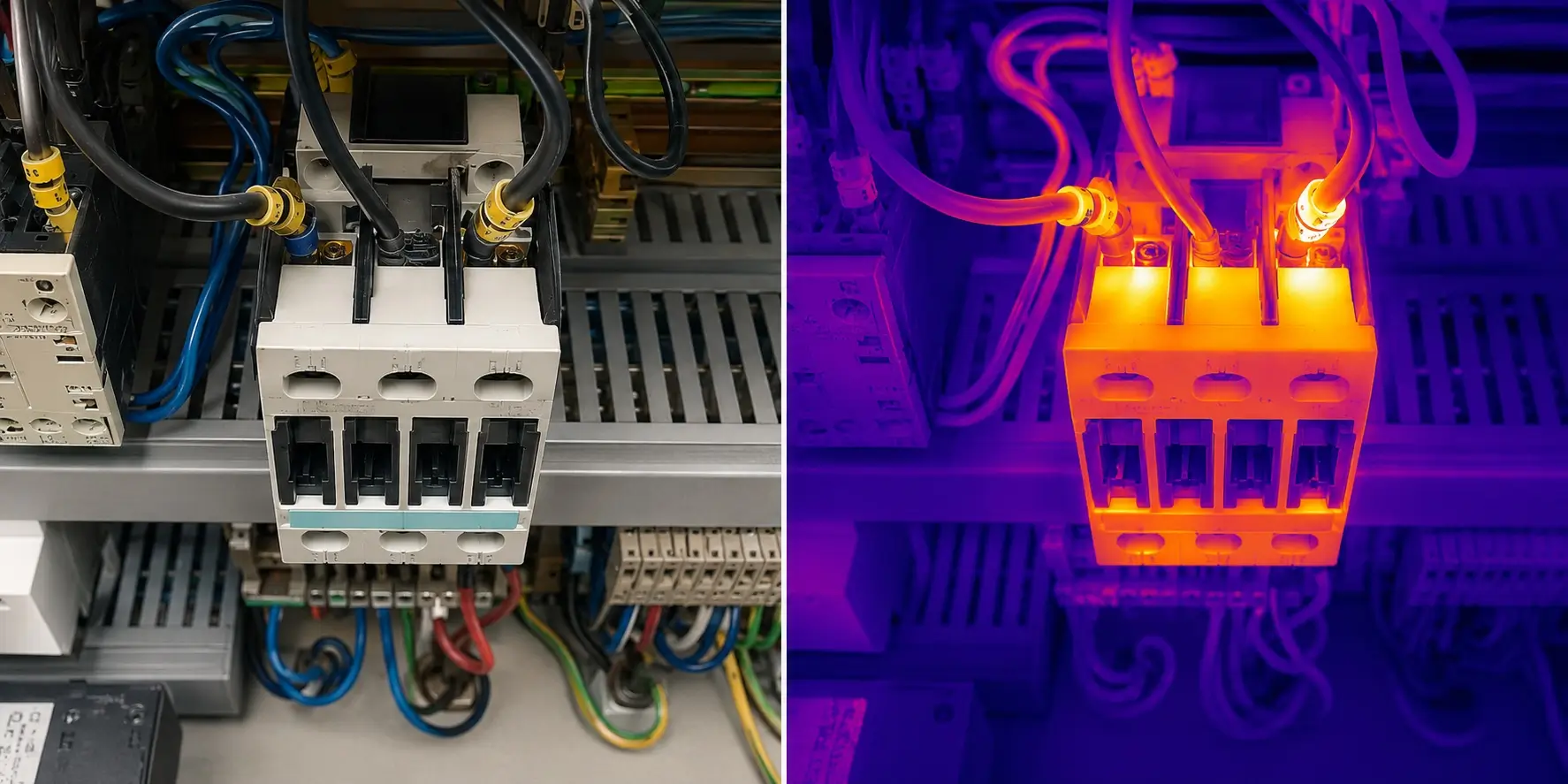
TCM's thermal imaging services use a high-resolution, real-time infrared camera across three applications: electrical thermography, mechanical thermography, and roofing & building science thermography. Each is shown below with a real case from a TCM field report.
Electrical Thermal Imaging
Finds loose connections, overloaded circuits, and overheating faults in electrical panels and switchgear — problems that are invisible until they cause a failure.
At a glance

Mechanical Thermal Imaging
Roofing & Building Science Thermal Imaging
Service 03
3. Flat Roof & Building Facade Thermal Scanning
TCM’s newest thermal imaging service extends inspection beyond the roof deck to the full building envelope: flat roof surfaces and exterior building facades. The same infrared camera used for electrical and mechanical thermography identifies moisture intrusion on flat roofs and heat-loss patterns across exterior walls, windows, parapets, and balconies — problems that are invisible to the naked eye but show up clearly on a thermal scan.
Case — Flat Roof Thermal Scan: a flat roof section was thermally scanned alongside a visual reference photo of the same area, isolating warmer zones (up to 29.0°C) that can indicate trapped moisture under the membrane.
4. Dragon Vision Video Deflection / Motion Amplification
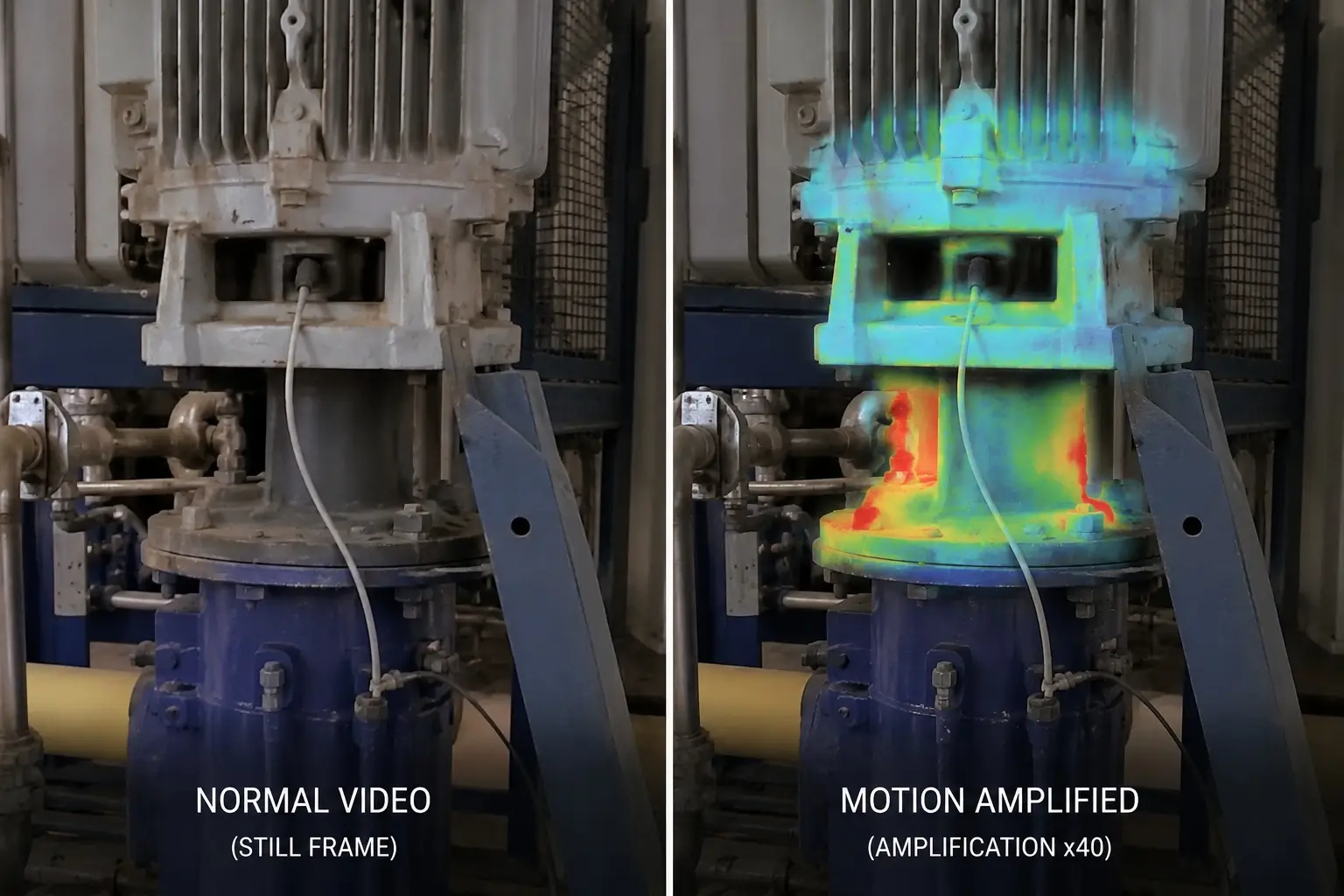
Dragon Vision motion amplification technology visualizes tiny structural vibrations, deflections, and movement that are invisible to the naked eye. The Wiser 3X Accelerometer is placed on the machine to gather data, which is then entered into the Dragon Vision software to analyze the amplified movements. It's especially useful for diagnosing looseness, resonance, and structural movement on equipment that's difficult or unsafe to instrument directly.
TCM records standard video of the equipment in operation, and Dragon Vision's software amplifies motion that's too small for the eye to see — revealing looseness, resonance, or structural deflection that a stationary sensor might miss or that would be unsafe to instrument directly.

5. Precision Laser Alignment
Misalignment is one of the most common causes of premature bearing failure. TCM offers two precision laser alignment tools: one for direct-drive couplings (shaft-to-shaft), and one for belt and pulley drives (the XT190) — both shown below with real tool photos and live readouts.
Precision Laser Direct Drive Alignment
A laser alignment sensor pair mounts directly on the coupling between a pump and motor, with a handheld display showing a live, real-time alignment visualization as adjustments are made — correcting shaft-to-shaft misalignment to a precise tolerance.
At a glance
Laser Pulley Alignment (XT190)
For belt and pulley drives, ACOEM AT-200 Precision Laser Direct Shaft to Shaft Alignment Tool measures Angular & Parallel misalignment between a Motor and Driven Unit correcting it to a precise Tolerance – extending the Motor and Driven units internal Components for longevity. The on-screen readout below shows a real 1.31° angular misalignment reading and shim/adjustment guidance for correcting it.
6. Ultrasonic Greasing
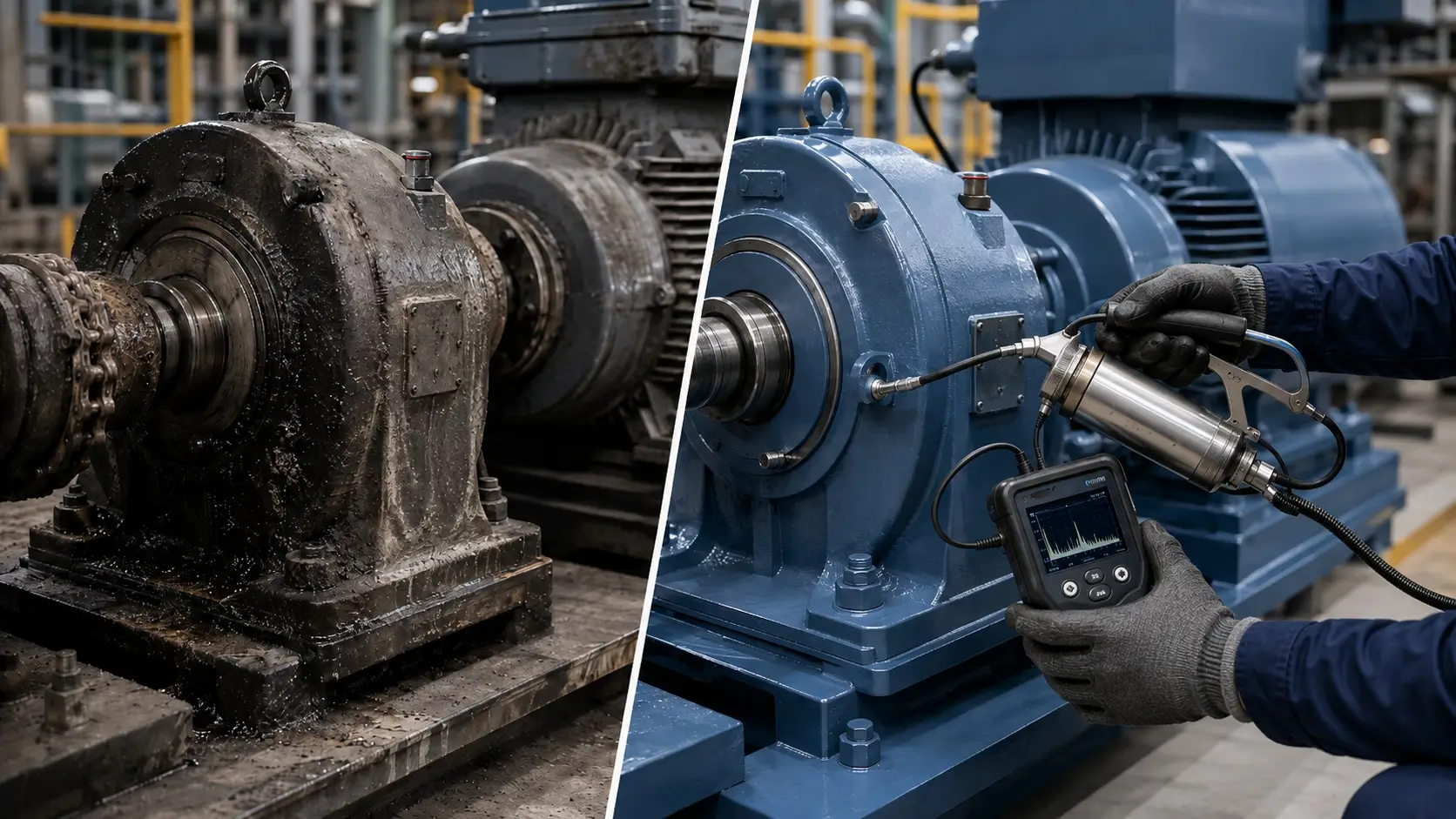
Over- and under-greasing are both common causes of premature bearing failure. TCM's ultrasonic greasing service listens to a bearing's actual condition and adds grease only when the ultrasound signature indicates it's needed, rather than on a fixed calendar schedule — extending bearing life and cutting wasted grease. TCM offers this both as a scheduled technician visit and as always-on autonomous sensors, described below.
Rather than greasing bearings on a fixed calendar schedule, TCM listens to each bearing's ultrasound signature and adds grease only when the reading indicates it's actually needed — avoiding both the wasted grease and seal damage of over-greasing, and the premature wear of under-greasing.

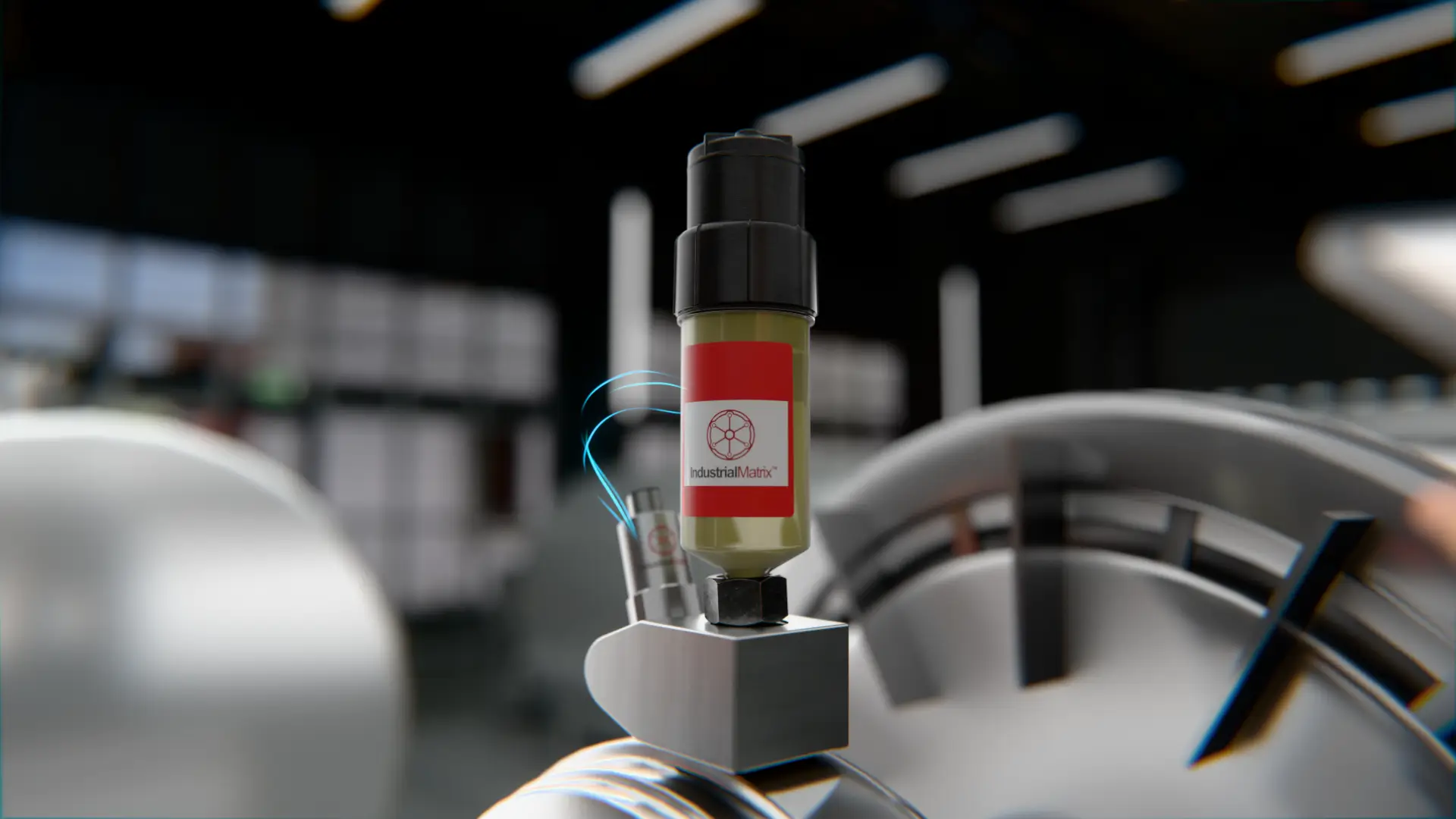
Autonomous Ultrasonic Greasing Condition Monitoring Sensors
For facilities that want continuous, hands-off lubrication management, TCM also installs autonomous ultrasonic greasing condition monitoring sensors — always-on LubeMatrix hardware that listens to each bearing around the clock and flags exactly when a grease application is needed, rather than relying on a technician's scheduled route visit.

7. Ultrasonic Acoustic Imaging
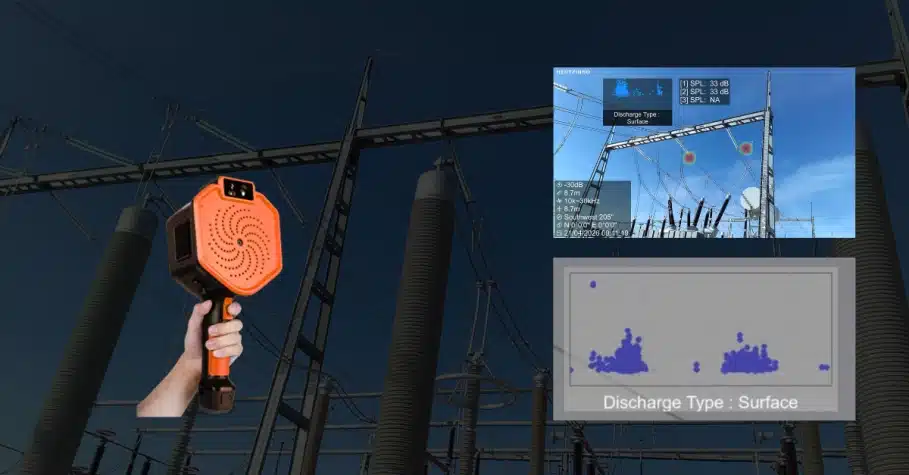
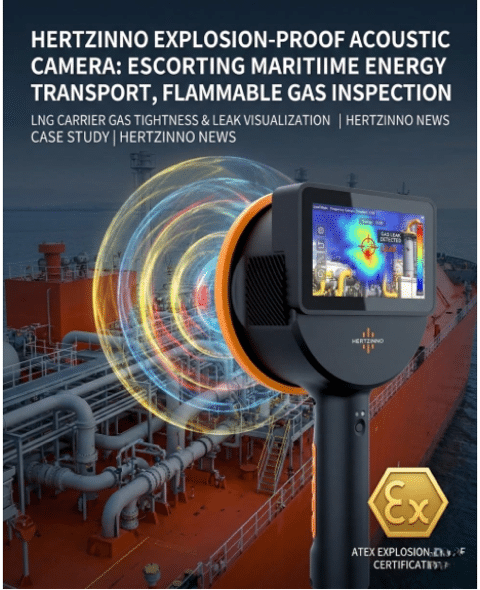
TCM's acoustic imaging cameras visualize airborne ultrasound to find faults a thermal camera or the human ear can't catch on their own — including partial discharge in high-voltage switchgear and power stations, compressed-gas and ammonia leaks (with ROI cost-of-leak calculations), and supporting ultrasonic greasing programs.
High-voltage power station inspection — detecting partial discharge before it causes an outage
Ammonia leak inspection with ROI — pinpointing leaks and estimating the cost of lost product
Ultrasonic greasing support — cross-referencing bearing condition alongside lubrication service


8. Wireless Condition Monitoring
For assets that need continuous oversight rather than periodic route-based checks, TCM installs wireless vibration and temperature sensors that report condition data around the clock — flagging a developing fault the moment it appears instead of waiting for the next scheduled inspection.

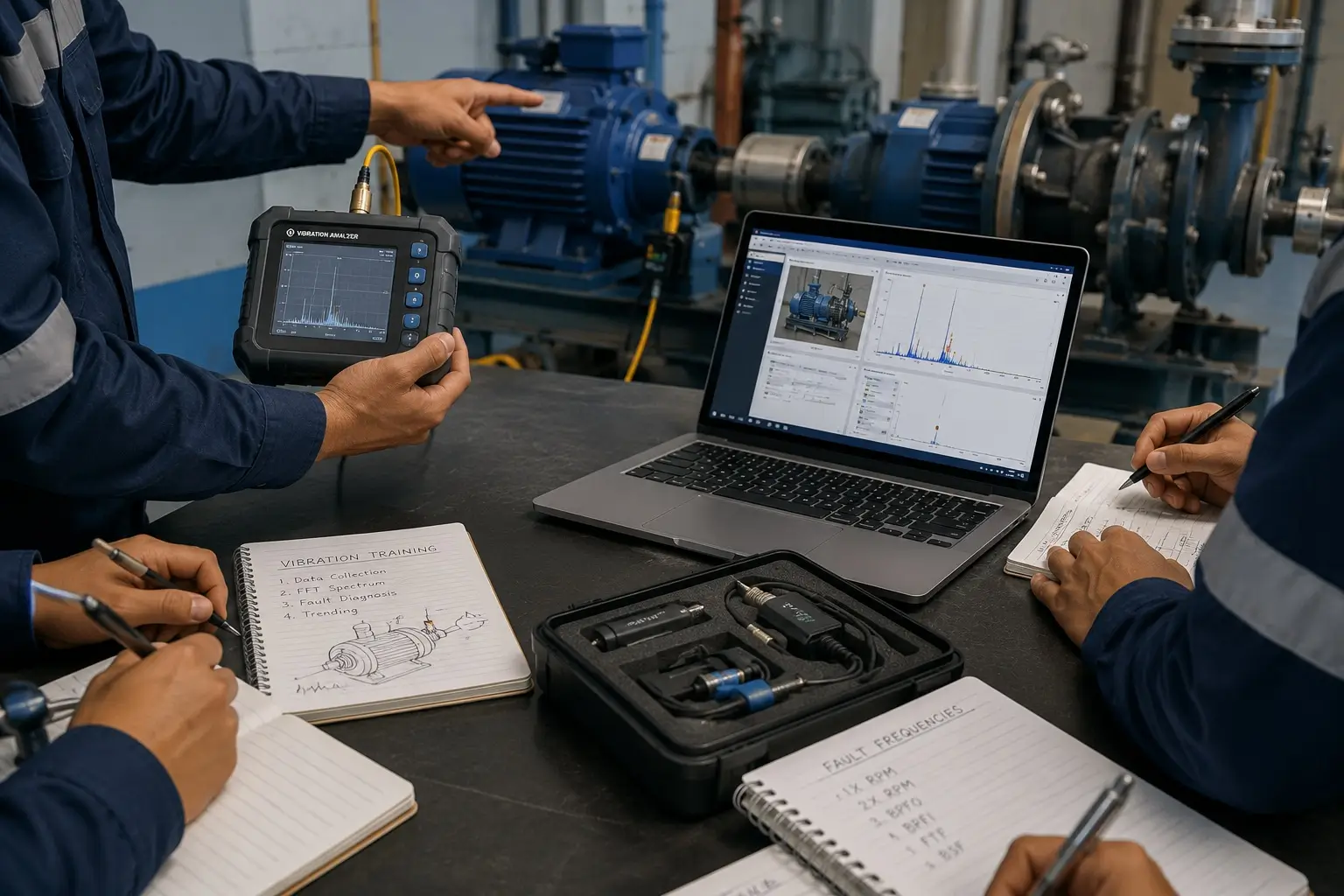
9. All Training
TCM offers vibration analysis and condition monitoring training packages for in-house maintenance teams who want to build internal capability alongside — or instead of — an outsourced inspection program. Packages can be scoped to your team's current skill level and equipment.

At a glance
10. 24/7 Emergency Services
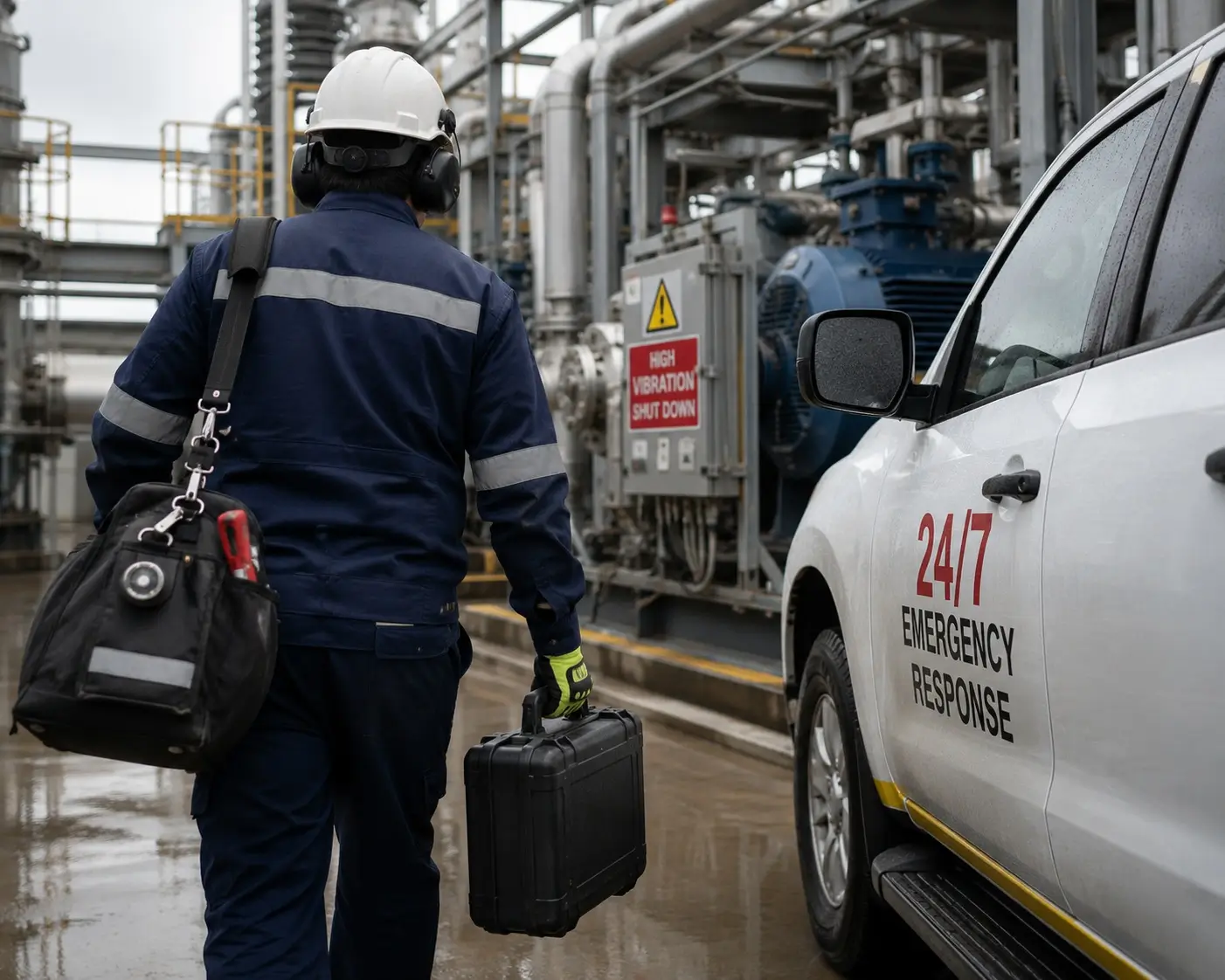
Equipment faults don't wait for business hours. TCM provides emergency call-out condition monitoring services 24 hours a day, 7 days a week, for urgent vibration, thermal, or alignment issues — bringing the same real diagnostic tools used on scheduled inspections to an urgent, after-hours call-out.

11. Consulting Services
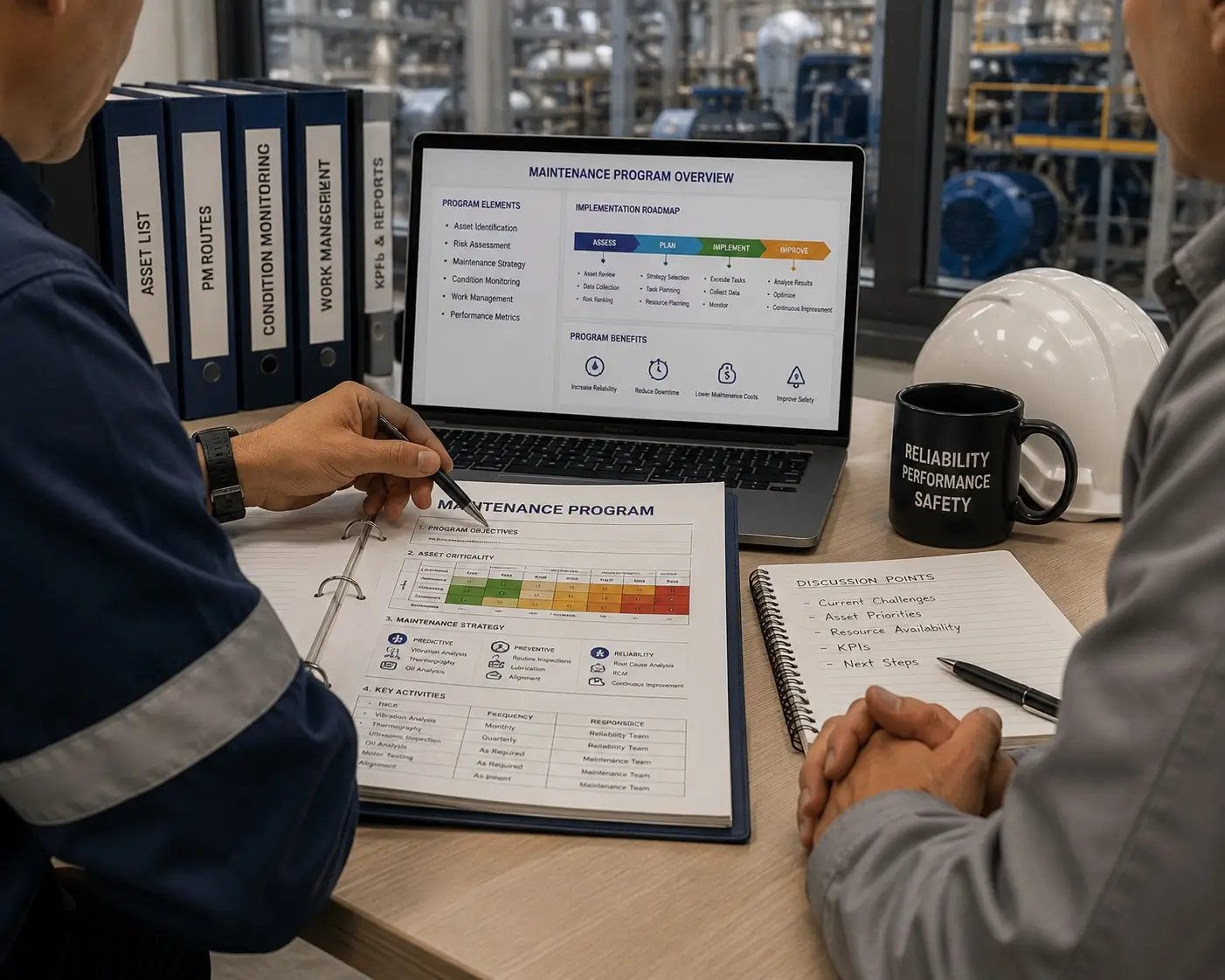
Beyond individual inspections, TCM offers consulting to help facilities analyze the effectiveness of their current maintenance program and identify where a condition monitoring investment would have the biggest impact — with concrete solution recommendations, not just a diagnosis.
Analysis of Maintenance Effectiveness
Solution Recommendations

Combinations of Technologies
Many facilities combine two or more of these services on the same visit — for example, vibration analysis with laser alignment, or thermal imaging with acoustic imaging — for a more complete diagnosis. Tell us what you need monitored, and TCM will recommend the right combination of services for your facility.
Why Choose TCM
Real before/after field evidence on every inspection type — not just a pass/fail alarm.
A single local provider covering vibration, thermal, motion amplification, laser alignment, ultrasonic, and acoustic technologies.
Services can be combined on the same visit for a complete diagnosis.
Sold and supported locally, with 24/7 emergency availability.
Frequently Asked Questions
How is a thermography fault rated red, yellow, or green?
TCM rates faults by the temperature delta above a normal reference point — under 20°C is normal, 20-40°C is a note, 40-70°C should be repaired later, and anything over 70°C is a repair-immediately red alarm.
Does thermal imaging or motion amplification replace vibration analysis?
No — they’re complementary. Vibration analysis gives precise readings at specific points, thermal imaging shows temperature-based faults, and motion amplification reveals structural movement invisible at normal video speed. TCM often combines them for a complete diagnosis.
What does 'ROI' mean for an ammonia leak inspection?
TCM estimates the cost of lost ammonia product from a detected leak, helping justify the cost of repair against the ongoing cost of the leak.
Can ultrasonic greasing be automated?
Yes — TCM also offers autonomous ultrasonic greasing condition monitoring sensors for continuous, hands-off lubrication management, in addition to scheduled technician visits.
Which assets are the best fit for wireless condition monitoring?
Critical, hard-to-reach, or high-risk assets benefit most — where a developing fault between scheduled route visits could cause real damage or downtime.
How do we get pricing for our facility?
Pricing depends on which services you need, the number of assets, and the size of your facility — contact us for a free, no-obligation quote.